You’ve Seen the Press, Now Hear Their Stories: Crafted At Boone Tavern
Late in 2024, Student Craft was asked by Berea to create a series of pieces for the Boone Tavern Dining Room as part of a full renovation of the space now known as Crafted at Boone Tavern.
Student Craft staff quickly went to work redesigning the curriculum for students and made this project the primary focus of its teaching during the spring. At Crafted’s opening on July 16, 2025, the space included 81 unique pieces created and installed by staff and students. By Spring 2026, an additional 132 objects will have been added.
Featured throughout this page are images of the work completed so far, and additional work will be added.
This is an installation truly greater than the sum of its parts, and we hope you will visit this transformed space in person to enjoy not only the décor but Crafted at Boone Tavern’s renewed commitment to locally sourced food that serves as a cornerstone of chef Kyle Klatka’s exciting menu.
Sey

Erin Miller
Cotton, wood, darach, crotal, rue, bracken root
2017
Sey in Scots means to try. This quilt is pieced from cloth dyed during a residency in Scotland, where Erin spent a month learning the art, science, and language of natural dyes. Erin pursued this research at a time when the majority of her design process was digital and she needed to reconnect with her hands, the earth, and her ability to joyously play. The techniques and materials were completely new to her, and unforgettably enchanting.
Rust Wall
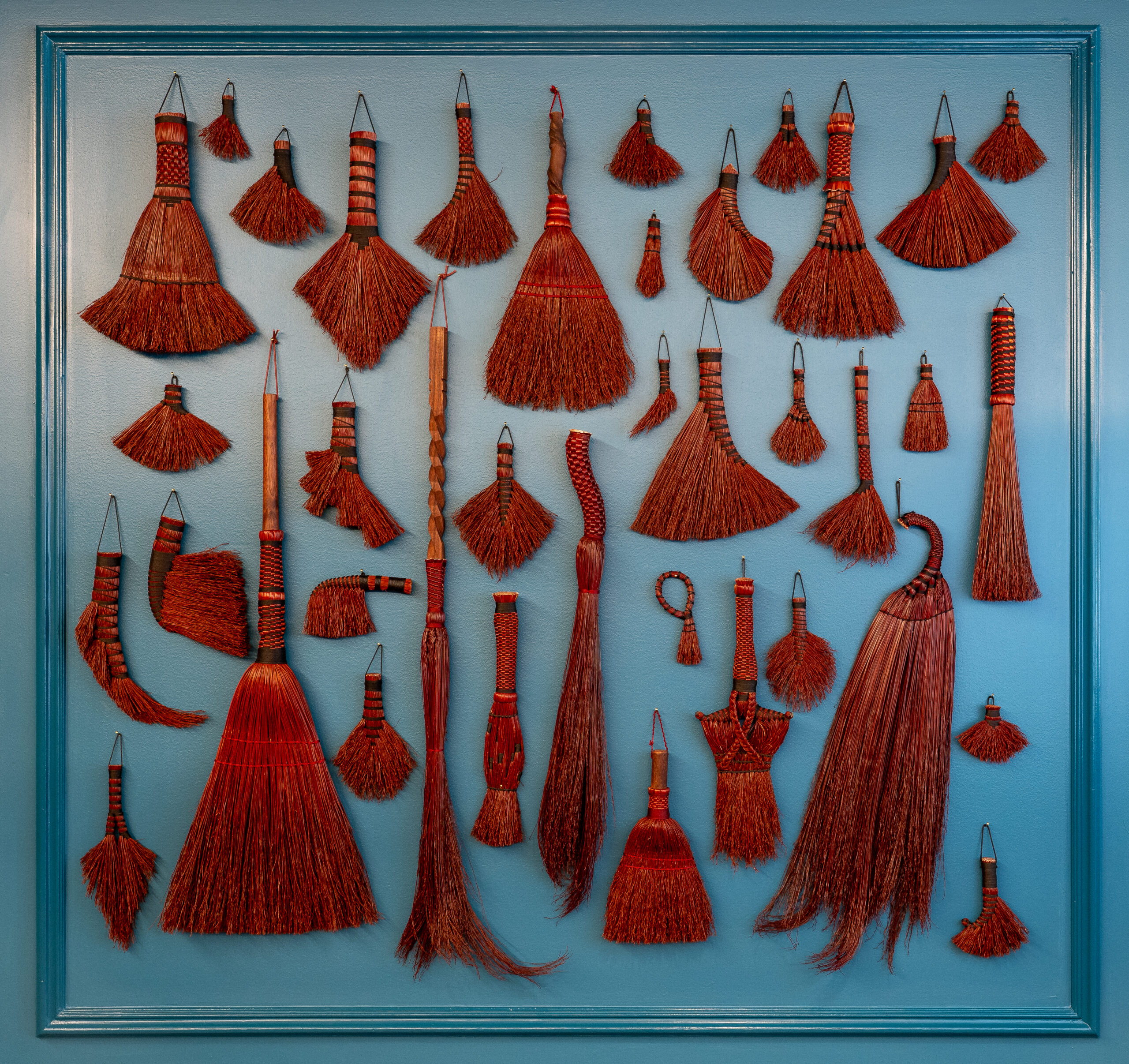
Destiny ’26, Cole Collins ’25, Helen ’27, Arbutus ’28, Baella ’26, Alex ’26, Breanna ’28, Sarah ’28, Mariah ’26, Quinn ’28
Sorghum, immersion dye, wire, nylon, cotton
2025
This wall of brooms (as well as Walnut Wall, right) was carefully designed as a collaborative project with contributions from every student in the broom studio. This showcase of student skill and creativity celebrates this year’s efforts to more completely understand the chemistry involved in using immersion dye with sorghum to create consistent and repeatable colorways. Each broom contained within this installation reflects the unique personalities and desires of the individual students who created them.
Woodshop Quintet
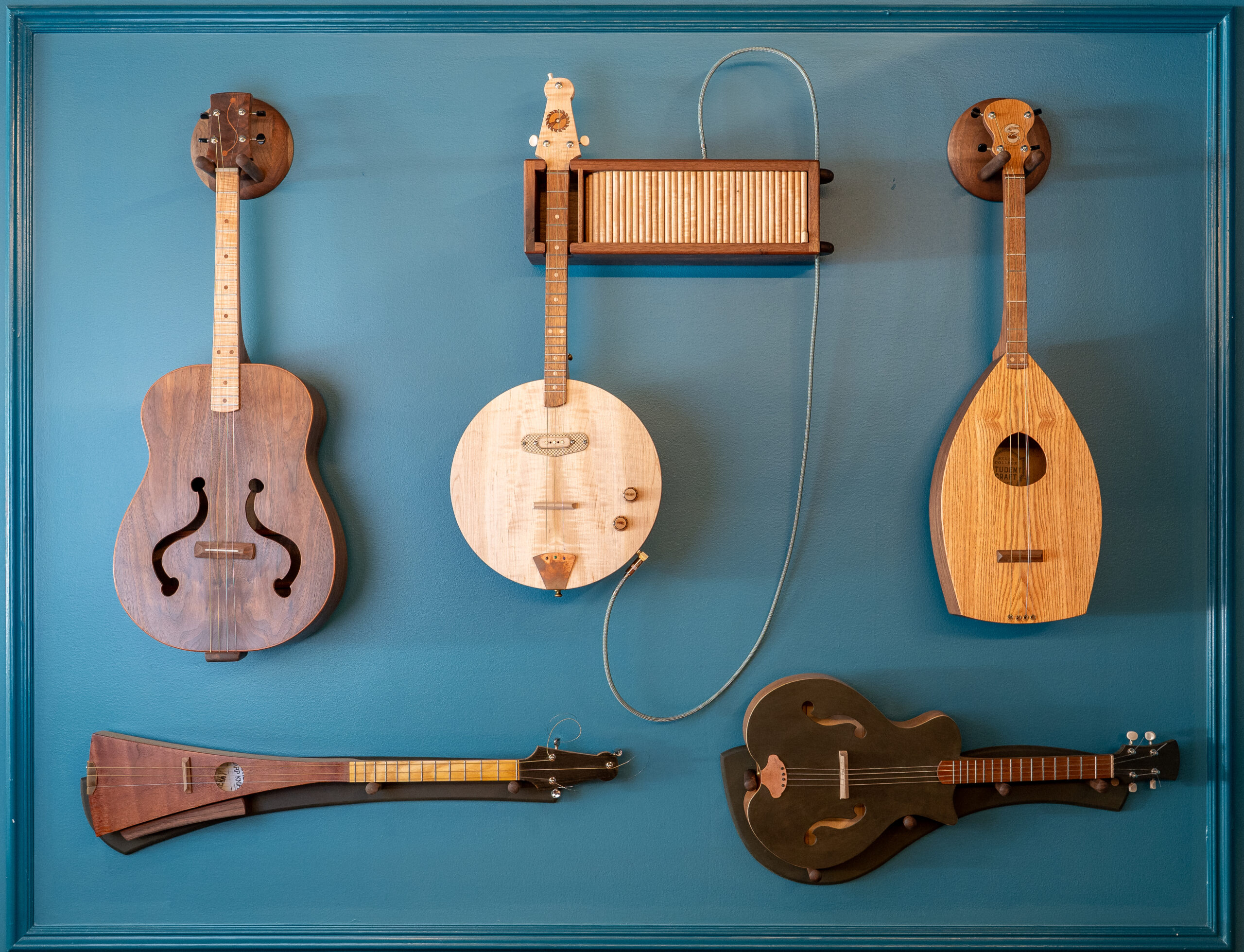
Rob Spiece, Beth Ireland, Janee ’27, Collin ’26, Ameer ’26, Sylvie ’27
Walnut, maple, Kentucky Coffee Tree, cherry
2025
This wall of brooms (as well as Walnut Wall, right) was carefully designed as a collaborative project with contributions from every student in the broom studio. This showcase of student skill and creativity celebrates this year’s efforts to more completely understand the chemistry involved in using immersion dye with sorghum to create consistent and repeatable colorways. Each broom contained within this installation reflects the unique personalities and desires of the individual students who created them.
Ceramic Bar Tile
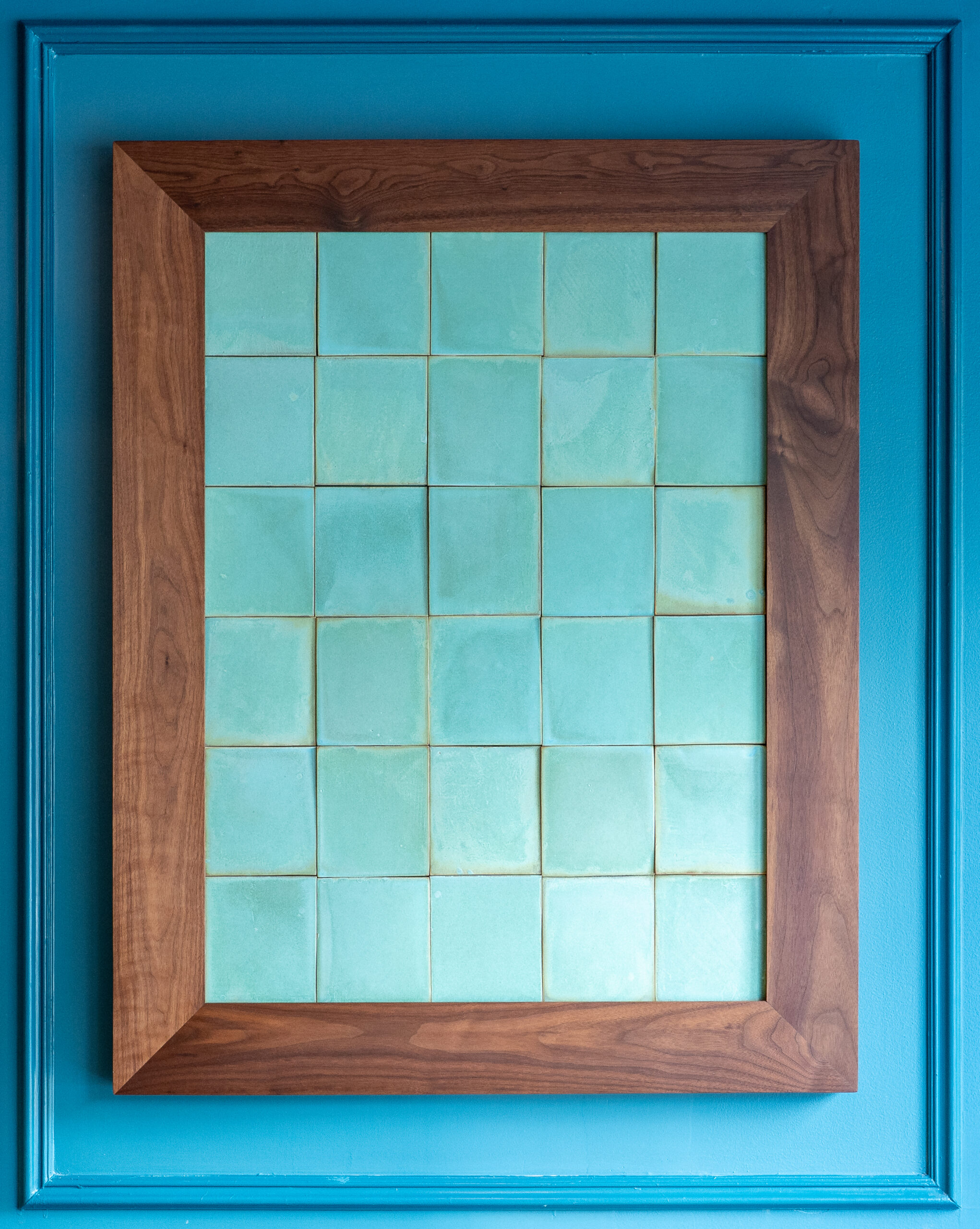
Florence Wright ’25, Elise ’26, Michelle ’26
White stoneware
2025
The student team for this project was led by Florence Wright ’25. Before tackling the aesthetic demands of the project, Florence and her fellow students had to develop strategies to allow them to accomplish the technical realities of the project. Creating tiles by hand that were flat and consistent enough to be handed off to a commercial installer whose previous experience was with factory produced stamped tiles was the first hurdle. The team accomplished this flawlessly while also building in planned structural variations to highlight the fact that these tiles are unique crafted objects.
To achieve a finish that aesthetically interacted with specific Boone Tavern architecture and dining room color palettes took on a particular resonance for our student designers, with many different hand-mixed glaze formulations assessed before settling on the verdant green glaze chosen for the final work. The pride our students felt from being given the opportunity to present well-made work in the Boone Tavern to friends and family cannot be overstated.
River Weft
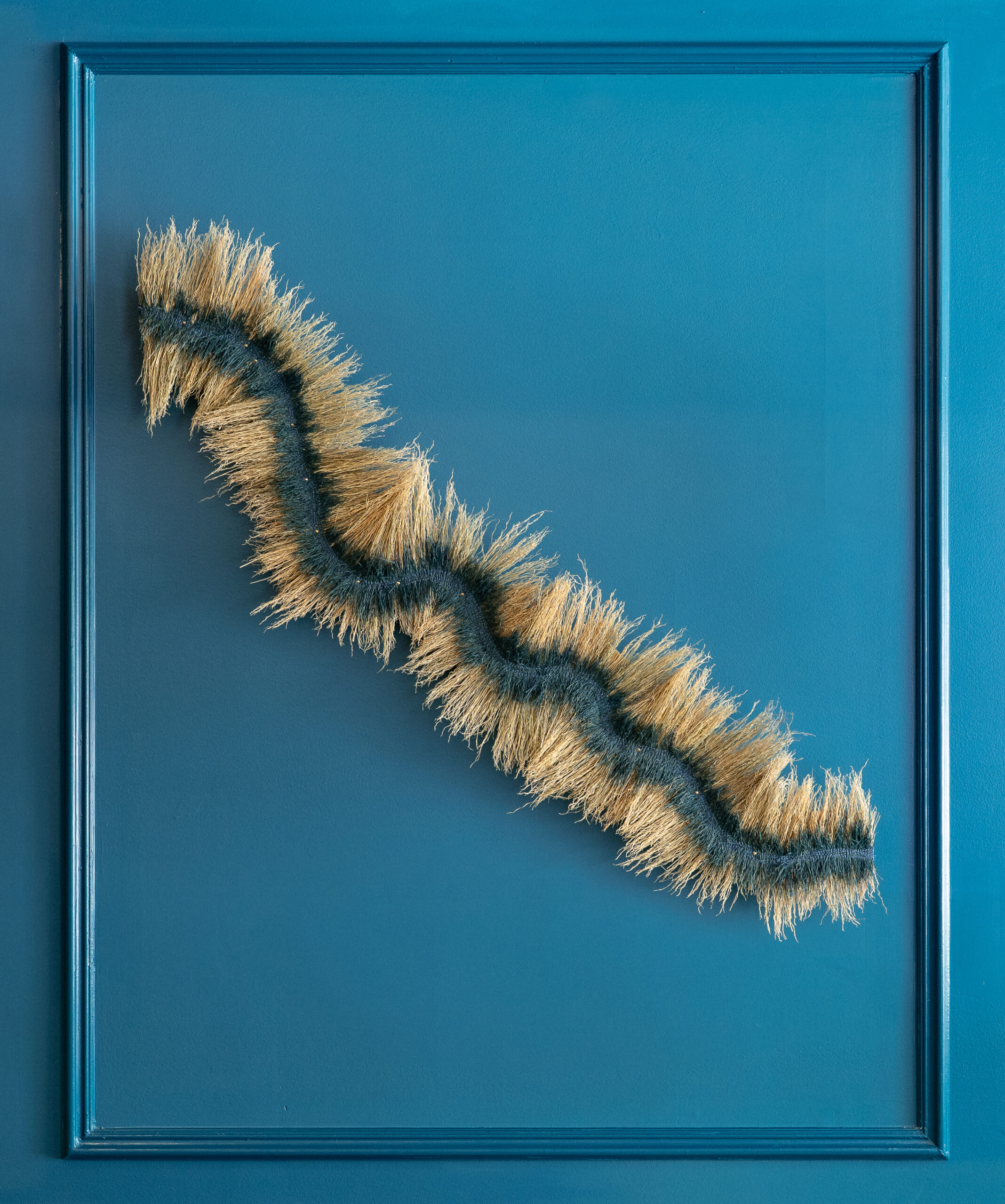
Amanda Lee Lazorchack
Sorghum, nylon, brass
2025
Taking the materials of a common tool from their original context, River Weft maps the Kentucky River. Using Sorghum as a warp, Director of Broomcraft Amanda Lee Lazorchack’s work invites you to consider where you are. Brass pins mark the locks and dams along the river. These systems have long been closed and sealed, making the Kentucky River a series of pools that you can no longer thru-navigate. This map is an exploration on the effects of separation; the river from itself, you from the river, the river from a larger regional shape on this wall. Contextualizing oneself in reference to the river offers one way to engage in this.
Seasonal Shift

Philip Wiggs ’90
Glazed mid-ranged porcelain, ash frames
2023
Philip’s work focuses on the convergence between life and the functional objects we own. As a person enamored by the beautifully rugged geography of the mountains where I live, I fear the potential for long-range environmental destruction through climate change and human overpopulation. I address these concerns in my artwork by using stressed ceramic surfaces and imagery. In recent work I have been using the ceramic tradition of plaster molds, making thick floating slip-cast rectangular tile forms to hang on the wall. On these tiles I’ve used simple layering techniques of cone six glazes and vinyl stencils, sandblasting those glazes to reveal a subsurface that provides sharply delineated linework contrasting with the surface texture. With this work I want to provide a picture plane to hang on the wall with a sense of decorative motion that challenges notions of stability and serve as a reminder of a world in flux.
Please Send Word

Amanda Lee Lazorchack
Regional handle, sorghum, nylon
2025
This broom, which is built onto a locally harvested sapling, honors the earliest traditions of broom making in Appalachia while moving the final form in a decidedly contemporary direction.
Morus alba 1-8
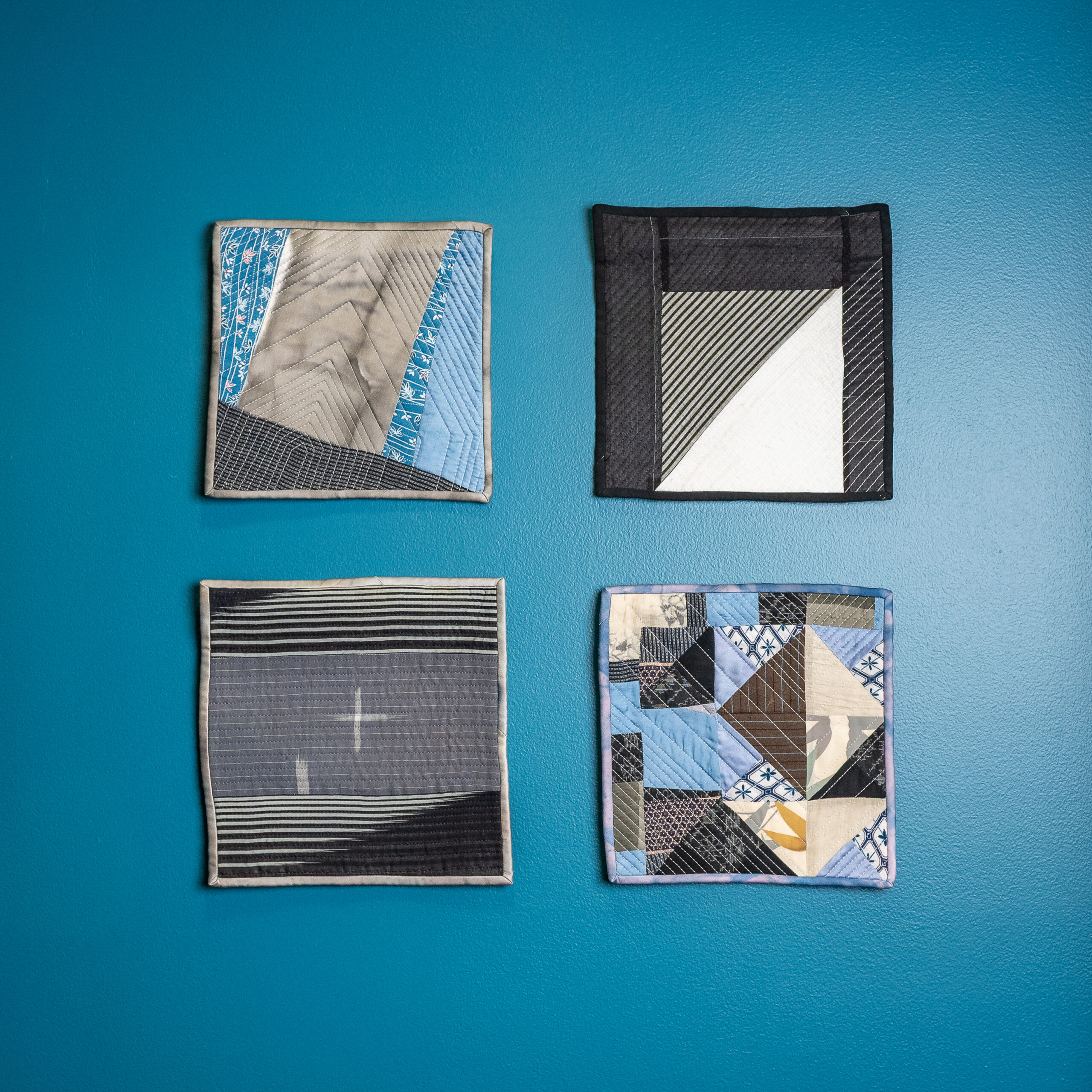
Erin Miller
Silk, cotton
2022
This body of work honors a past self with the gift of time and intuition. When weaving, Erin primarily relies on the systems and constraints of the medium as boundaries to focus my thoughts and energy in a navigable direction. When quilting, they choose to work with fabrics that have already known a life of some sort before they arrive to them. These quilts were developed using silks that made their way to Erin through many hands, whose individual histories have been lost to time and travel. Their pattern, texture, wear, and character inform the design and piecing process. Their diminutive size allowed for an investigative playfulness; the building of a relationship and understanding with each quilt as they worked through its form.
Flower Tiles

Alyzia ’27, Maddie ’26, Lihuen Rousseaux’25, Diliara ’26, Faryal ’26, Valerie ’27
Black stoneware, unglazed
2025
These ceramic tile wall pieces (this one and the one to the right) represent the combined efforts of Craft students exploring the decorative traditions of tile and flower-making in the ceramic studio. Ceramic flowers and tiles are historic decorative traditions utilized in well-known international pottery centers and markets in India, France, and England.
Walnut Wall

Destiny ’26, Cole Collins ’25, Helen ’27, Arbutus ’28, Baella ’26, Alex ’26, Breanna ’28, Sarah ’28, Mariah ’26, Quinn ’28
Sorghum, immersion dye, wire, nylon, cotton
2025
This wall of brooms (as well as Rust Wall, left) was carefully designed as a collaborative project with contributions from every student in the broom studio. This showcase of student skill and creativity celebrates this year’s efforts to more completely understand the chemistry involved in using immersion dye with sorghum to create consistent and repeatable colorways. Each broom contained within this installation reflects the unique personalities and desires of the individual students who created them.
Summer Storm
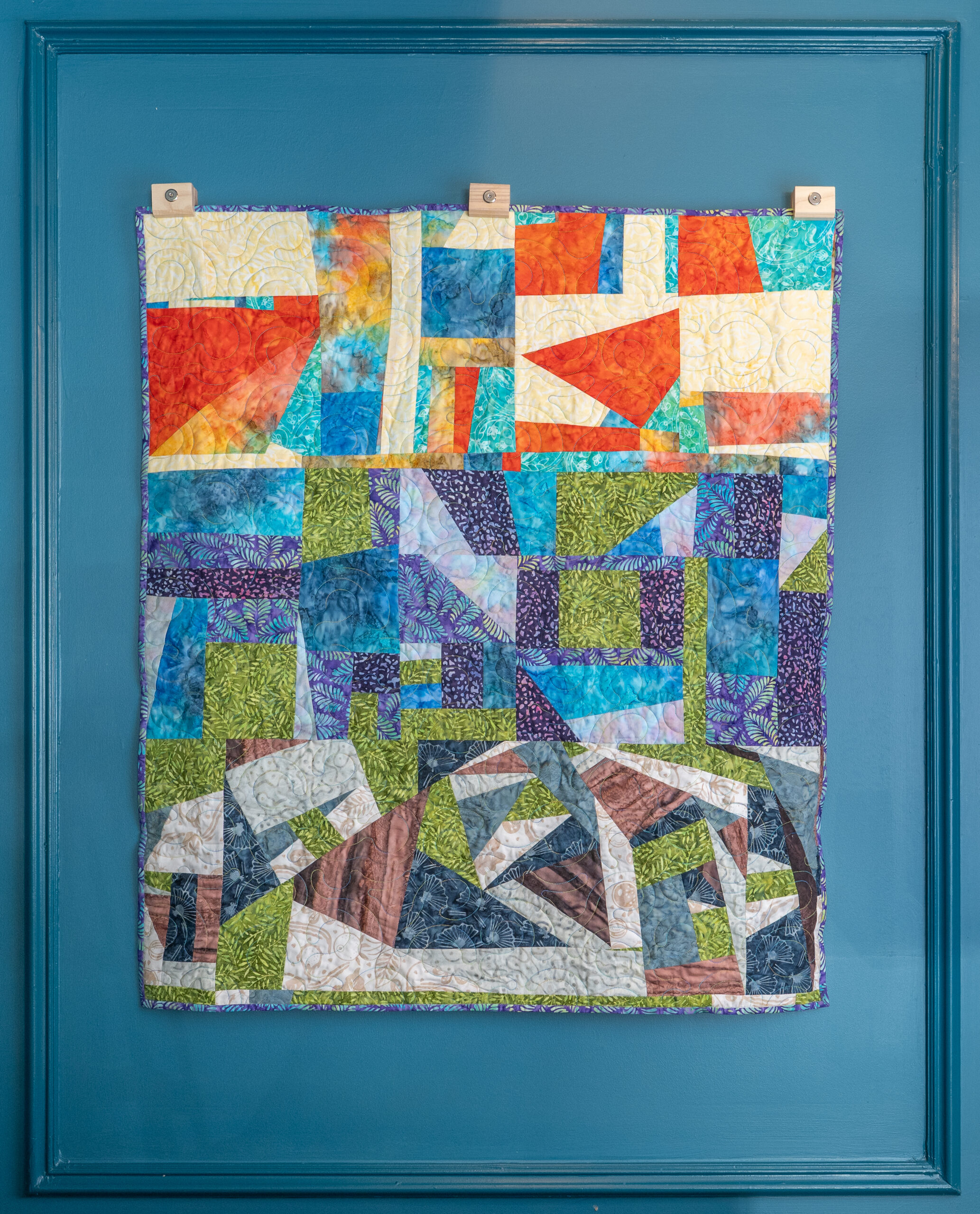
Dora Franks ‘23
Cotton
2024
After studying batik fabrics and learning about the process, students found inspiration in images of water and earth, imagining the cloth laid outside after dyeing. Together, they collected images of summer rainstorms then dissected and abstracted the colors and imagery. Led by Dora Frank ’23, students learned about the process of improvisational quilting to create a variable composition that allows each quilt to be one of a kind while maintaining consistency. The batiks used for this quilt were sourced from a fair-trade distributor that works with artists in Indonesia to create unique, small-batch fabrics.
Intersections

Sharon Ngassa ’21, Aaron Beale
Walnut, mahogany, maple, ash, cherry
2025
Inspired by the Intersections charcuterie board design created by student Sharon Ngassa ’21, this original work by AVP of Student Craft Aaron Beale champions the beauty and complexity of the world we live in and the differences inside every individual.
Sharon’s original design is based loosely on diagrams she had seen in class depicting circles of color as a means of representing both the differences inside all of us as individuals and the need for that difference inside any healthy society.
Squiggle
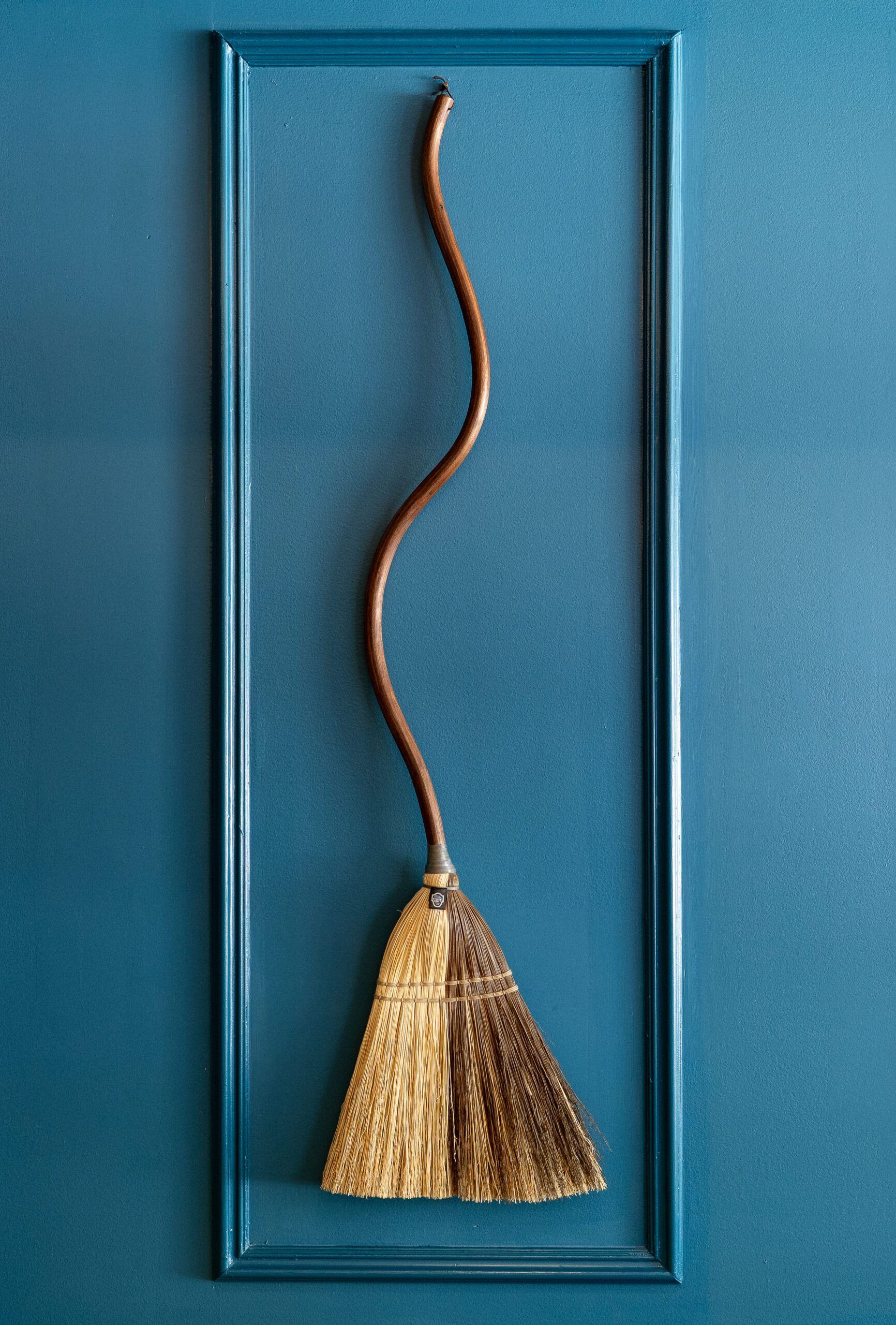
Rob Spiece, Amanda Lee Lazorchack, Hunter Elliott
Sorghum, walnut, cotton
2025
An interdepartmental collaboration between Woodcraft and Broomcraft. This playful broom blends sculpture and tradition. Presenting learning opportunities with lamination & hand bound techniques. This contemporary design keeps function intact.
Whisks
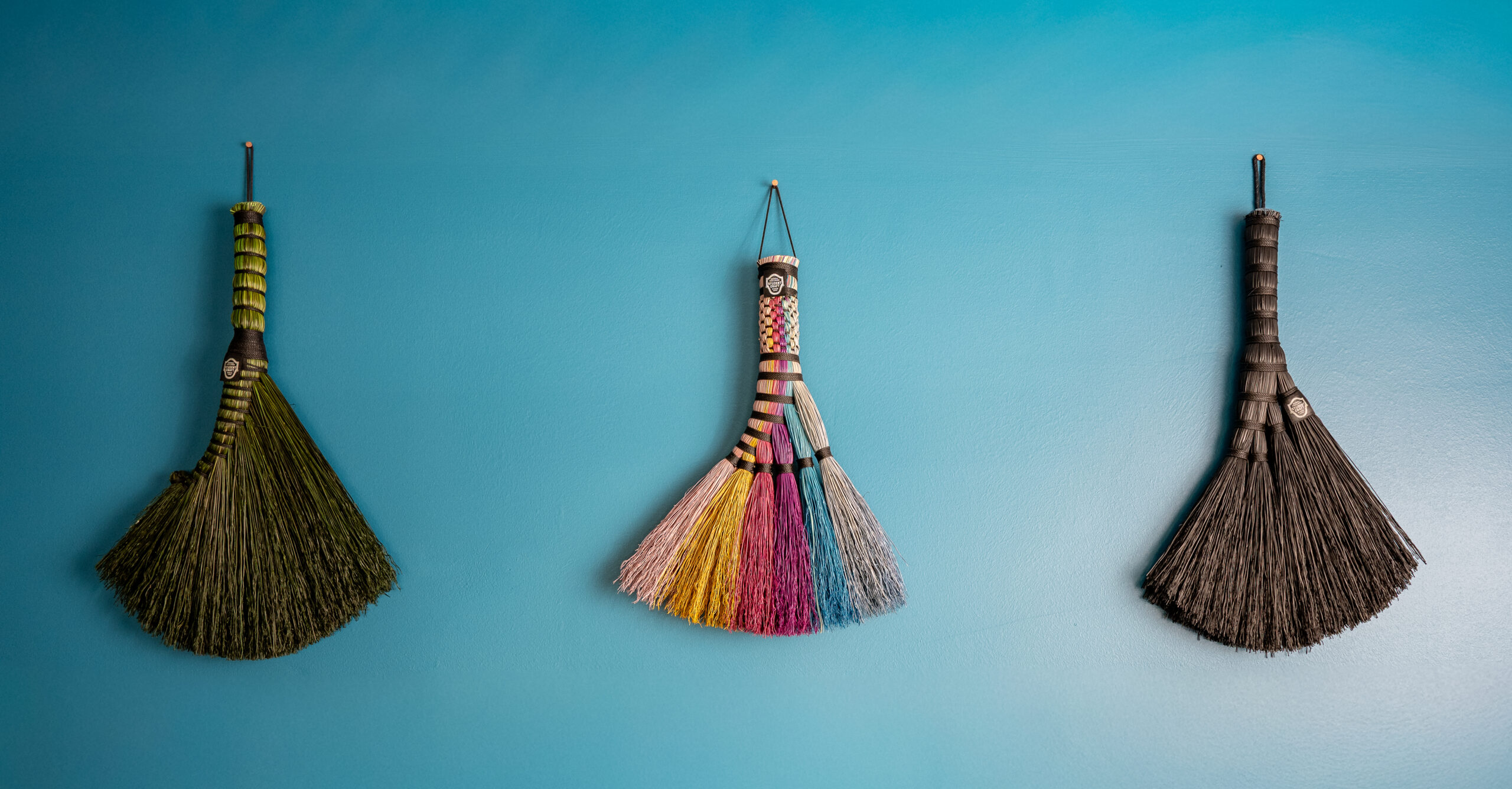
Helen ’27, Destiny ’26, Alex ’26
Sorghum, cotton, nylon
2025
The whisk brooms in this collection were created as part of the design process for this year’s new Rainbow Whisk. By melding Shawnee, European, and Japanese influences, our students have created something that continues the evolution of the brush and broom making traditions of our region.
Student Craft. Process.

Erin Miller, Hunter Elliott, Katie Bister
Mixed Media
2025
This piece celebrates the tools and techniques used to bring the work you see throughout the dining room to life. For many of our students their experience in the Labor Program is their first opportunity to design and participate in the artistic process. With support and access to tools, students at Berea College create works that have been featured in some of the finest museums and collections not only across the United States but around the world.
Garden Sampler Quilt

Shaylee Hall ’23, Sisaly Krick ’25, Shekinah Villahermosa ’23, Leeroy Mabvuta ’23, Evelyn Schroeder ’22, Zy Garrett ’22, Ei Zin Aung ’23, Dora Frank ’23, Blade Hicks ’22
Cotton
2023
The quilt featured here is the very first quilt made within the Student Craft program. Featuring nine student-designed quilt squares, each square has been created with the intention of developing a richer understanding of the college’s Eight Great Commitments.
To read the stories behind each student-designed square, click below.
Table Centers
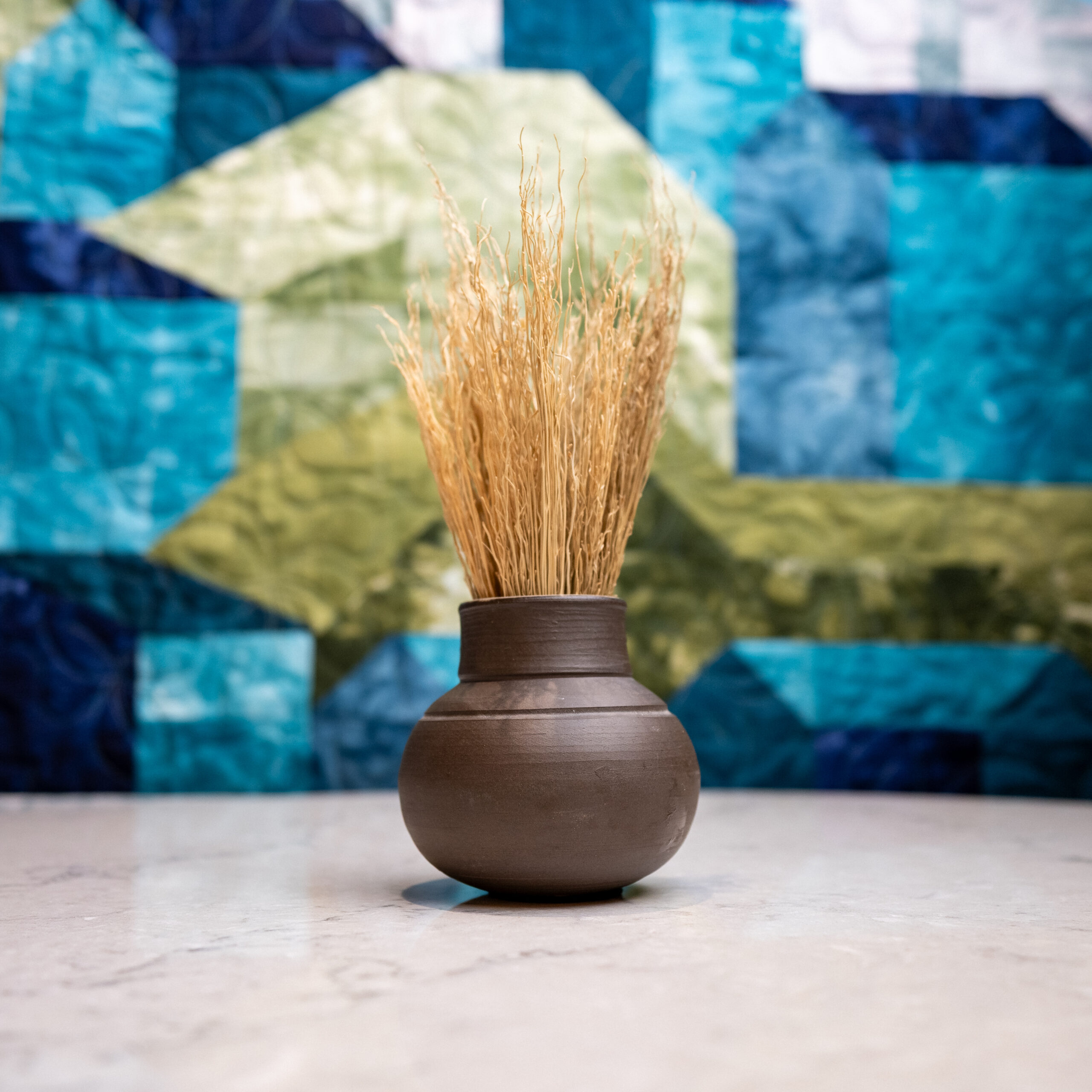
Iris Gibson ’25
Black Stoneware
2025
These table centers were designed by student Iris Gibson ’25 to reflect the hope of mid-century modernist design and to celebrate the beauty of difference. While clearly part of a series, each table center is as unique as our students themselves, and the strength of each individual vase combines to create a whole much stronger than the sum of its parts.
Flower Tiles
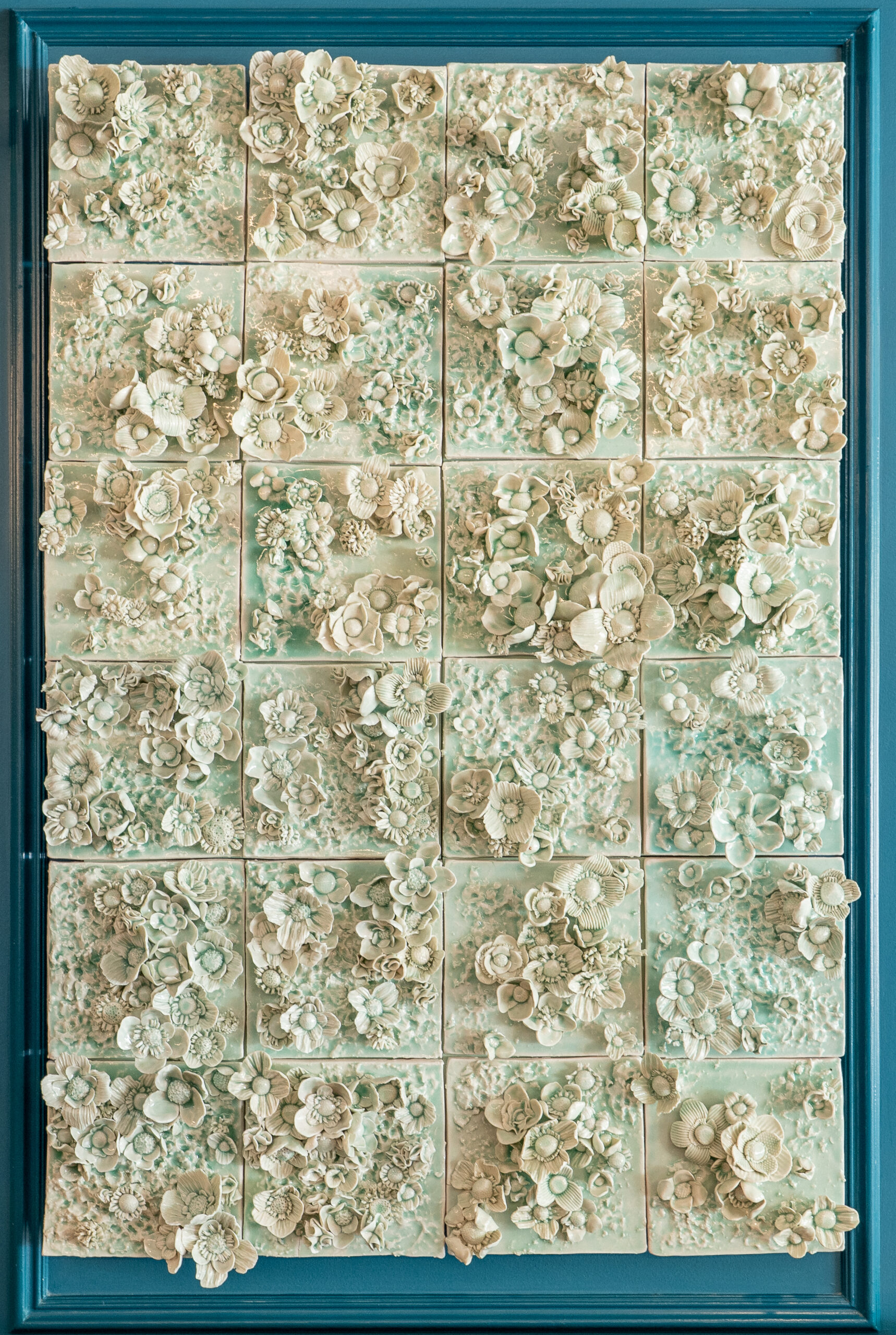
Alyzia ’27, Maddie ’26, Lihuen Rousseaux’25, Diliara ’26, Faryal ’26, Valerie ’27
Black stoneware, unglazed
2025
The student team for this project was led by Alyzia ’27. These tiles provided a platform for student-led creativity and expression that pushed the clay studio traditions from functional ware toward site-specific tile mural decoration. Although the projects began by being inspired by the natural world of plants and architecture, they became influenced by the environment they were meant to fill. Because we were making work that interacted with specific Boone Tavern architecture and dining room color palettes, the work took on a particular resonance for student designers.
My Grandmother’s Window

Dani Helton ’25
Cotton, immersion and natural dye
2025
With Berea’s commitment to serving Appalachia in mind, student Dani Helton ’25 used this quilt to explore some of the most meaningful techniques she learned working in Student Craft to celebrate her family. Constructed with hand-dyed cloth, the central mountain scene depicts a photograph taken from her grandmother’s land and is framed with both handwoven cloth and traditionally pieced quilt blocks. Dani’s mother also worked in the Weaving studio while attending Berea College, and many of their family members are quilters. This project deepens Dani’s connection with her family, her personal values, and how Berea College has shaped her life.
Leaves of Berea
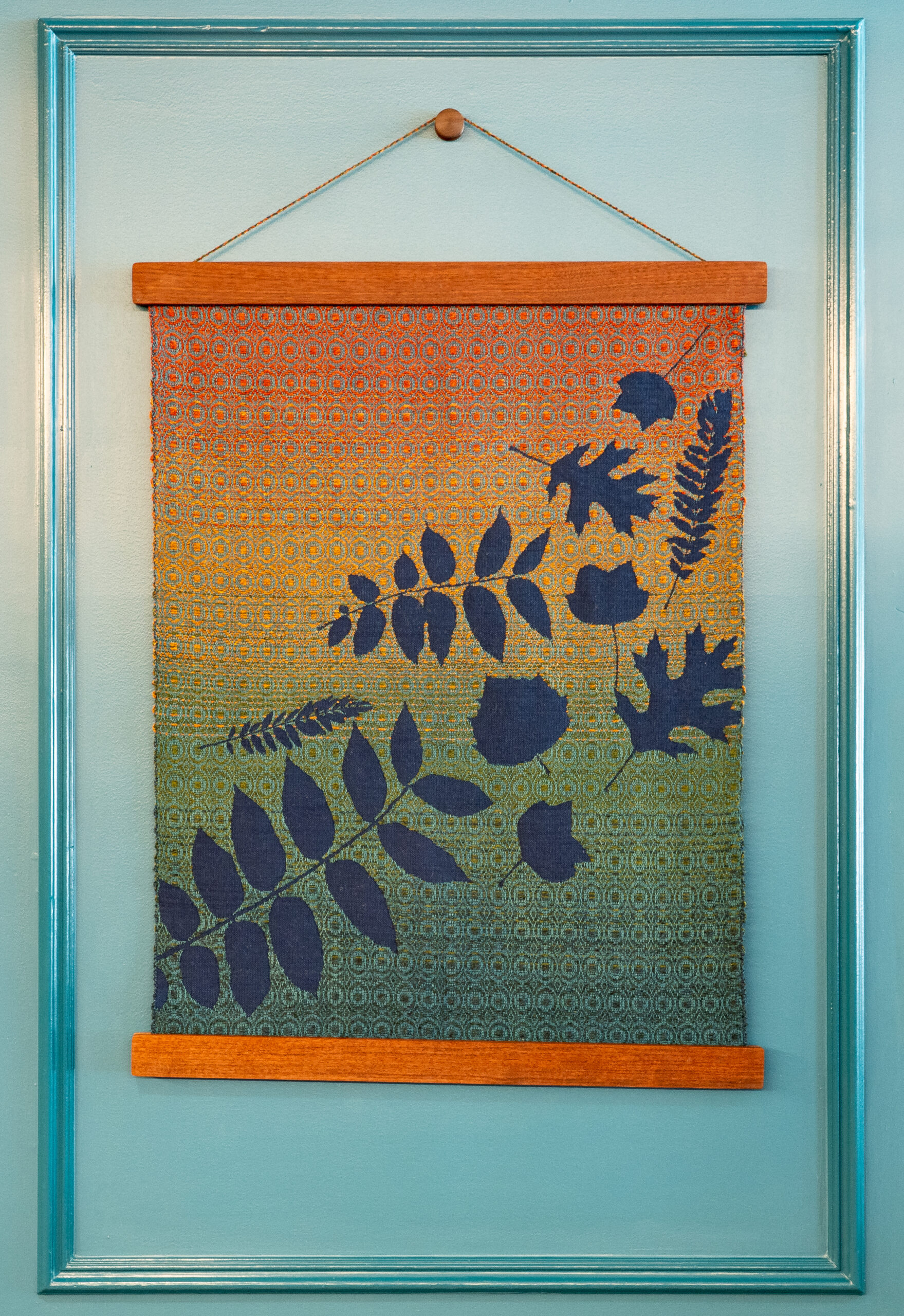
Emerson Croft ’21
Wool, cotton
2025
This piece is homage to the liberal arts education Emerson acquired at Berea College and the ways in which it influenced them. Two layers, vastly different in appearance and complexity, connected seamlessly in the same piece. One layer woven in changing colors, using a weave structure reminiscent of the coverlets that started what is now called Berea College Student Craft. The other layer, much simpler in structure and appearance.
In Emerson’s academic studies as a biology major, they studied the natural world. It was rigorous but comprehensible: Biology is our best understanding of how the world works and they needed to study it. Science is not an immutable list of facts, but the material for science classes can be. It was challenging and fascinating—and straightforward.
Their labor position as a weaver was much more confusing. There are so many ways to do any given task. When designing a new product, they had seemingly limitless options available to them. There were never any simple answers, and they longed for simple answers. They initially struggled with the creative freedom they were afforded in the weaving studio, which made their successes that much more rewarding.
These seemingly disparate experiences were connected by one thing: Berea College. The two woven layers in the piece are themselves woven together in the image of a smattering of leaves collected on one morning walk across campus. Important to note, Emerson shares, is that what may be visually absent is still present, tucked behind what came to the forefront. Even when not visible, each layer is still supporting the other and providing integral structure to the full piece. While weaving became Emerson’s passion, they wouldn’t be who they are without their academic background.
Fee Society Weaving
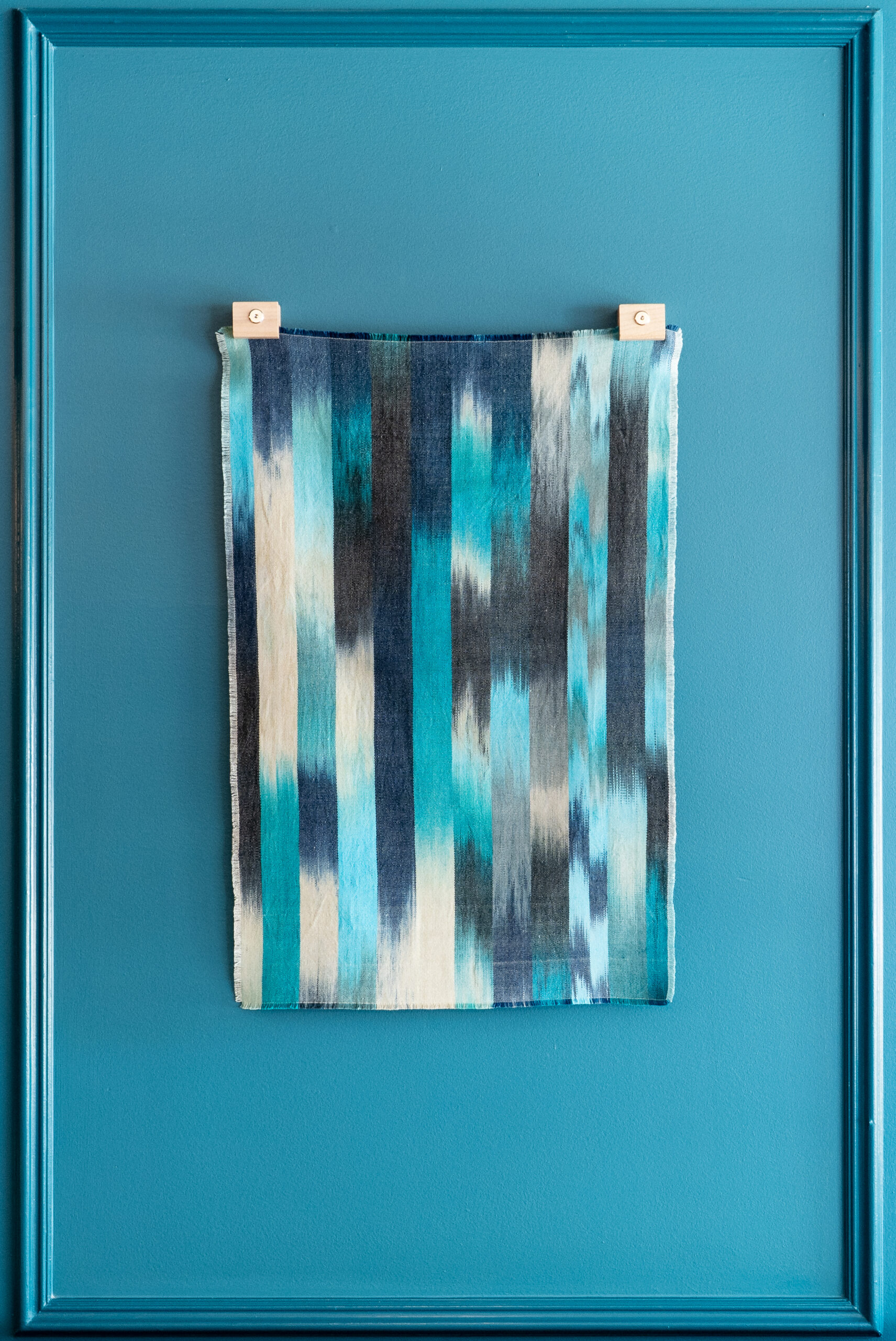
Holly Hudson ’24
Silk, cotton
2024
Hand dyed and artistically warped and woven by student Holly Hudson ’24, this piece celebrates the contributions of Berea’s Fee Society to the ongoing operations and mission of Berea College.
Any Room Broom
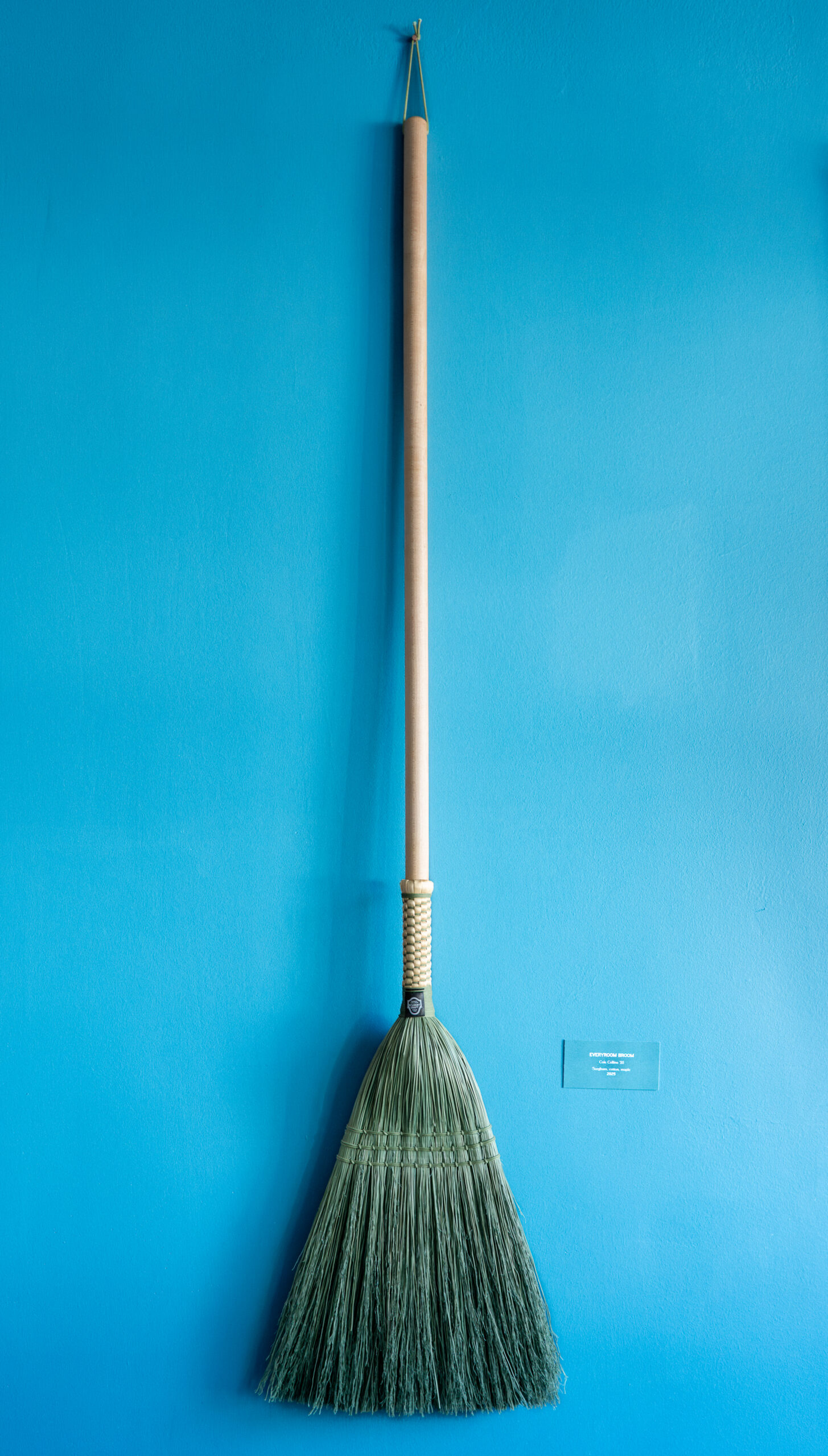
Cole Collins ’25
Sorghum, cotton, maple
2025
A utilitarian broom with a woven flourish. A pop of contemporary colors, bound to a regionally sourced hardwood handle, plaited and stitched in matching colors. A broom for any room.
Hypnotizer Cabinet
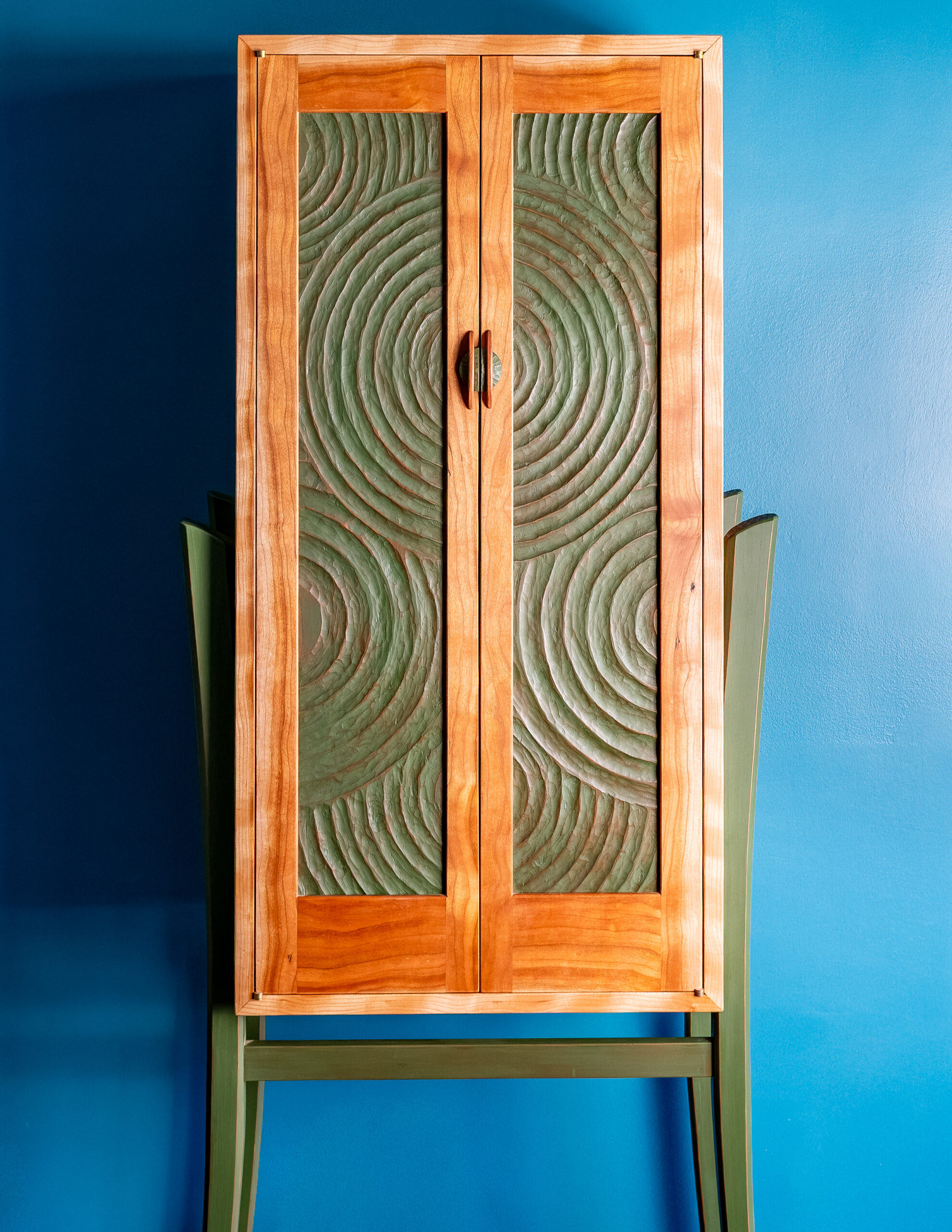
Rob Spiece
Cherry, milk paint, wool
2023
This dovetailed cabinet on stand is made of figured Pennsylvania cherry. Since having moved from Pennsylvania to Berea, Kentucky, Rob has admired the hand work of my fellow Appalachian artists. This appreciation led Rob to carve the door panels. Laid out in a book match, the overlapping circles may hypnotize you if you’re not careful. The panels were hand shaped with carving gouges, and the painted finish highlights the tool marks of a burgeoning woodcarver. The interior is fitted with four drawers and lined with wool. A catch-all bowl nests in the upper shelf.
Brooms
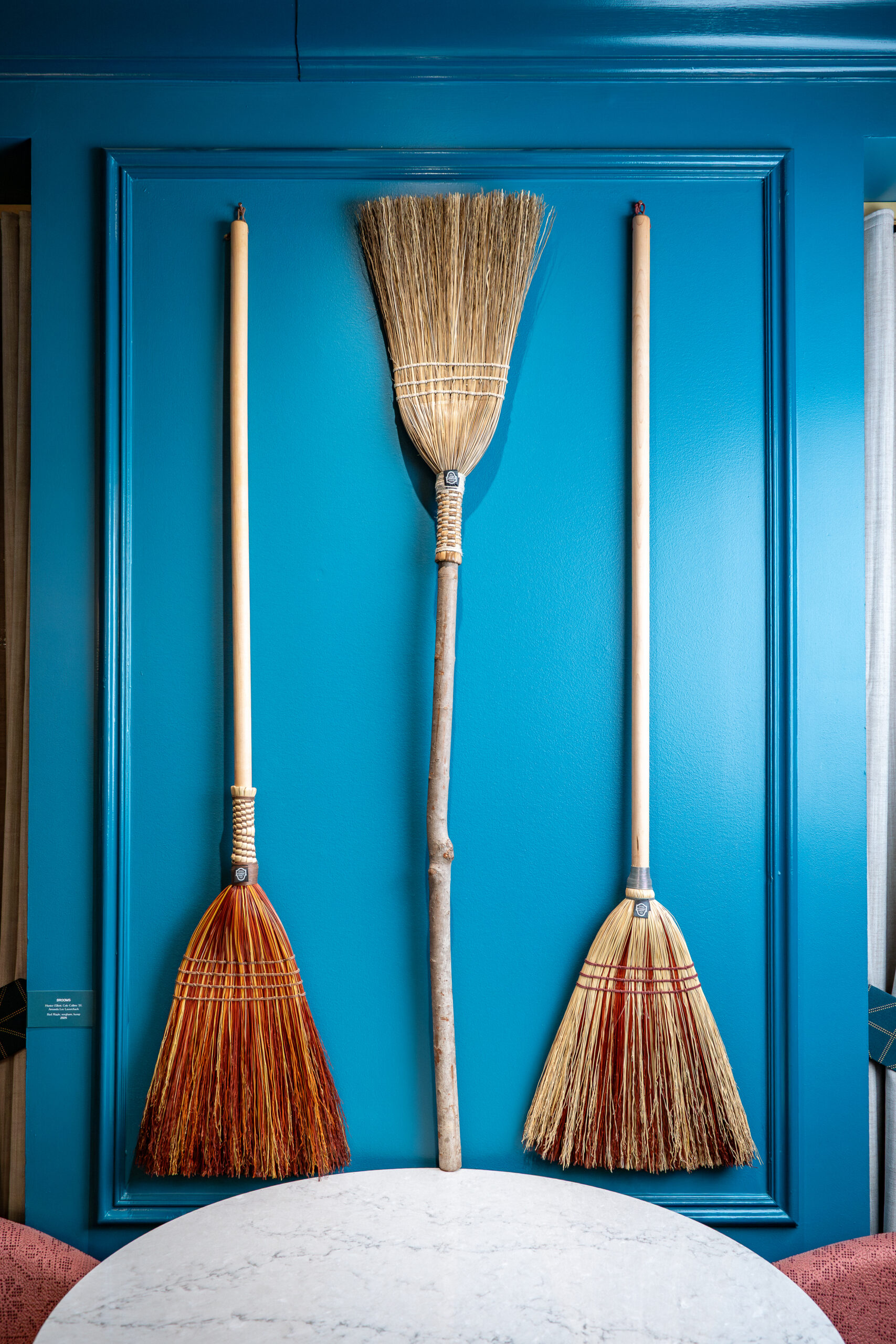
Hunter Elliott, Cole Collins ’25, Amanda Lee Lazorchack
Red Maple, sorghum, hemp
2025
This collection of brooms celebrates three distinct designs currently created in the Broom studio. On the far left, we see Cole Collins ’25’s evolution of the Shaker Braid pattern, which was adopted by the broom studio in the 1980s. Cole’s mastery of advanced plaiting techniques takes the decoration of this piece to a new place. In the middle we see the Forest Broom designed by Hunter Elliott as part of a larger push toward more local and sustainably harvested materials. By using red maple saplings for the handles of these pieces, we support the work of Berea’s Foresters to increase diversity within Berea’s Forest in the face of climate change. The broom on the left is a prototype developed by Amanda Lee Lazorchack for use with our sunrise gravity holder. This broom evolves the Streamliner tradition in the broom studio at Berea College begun in the early 1930s.
Broom Quilt
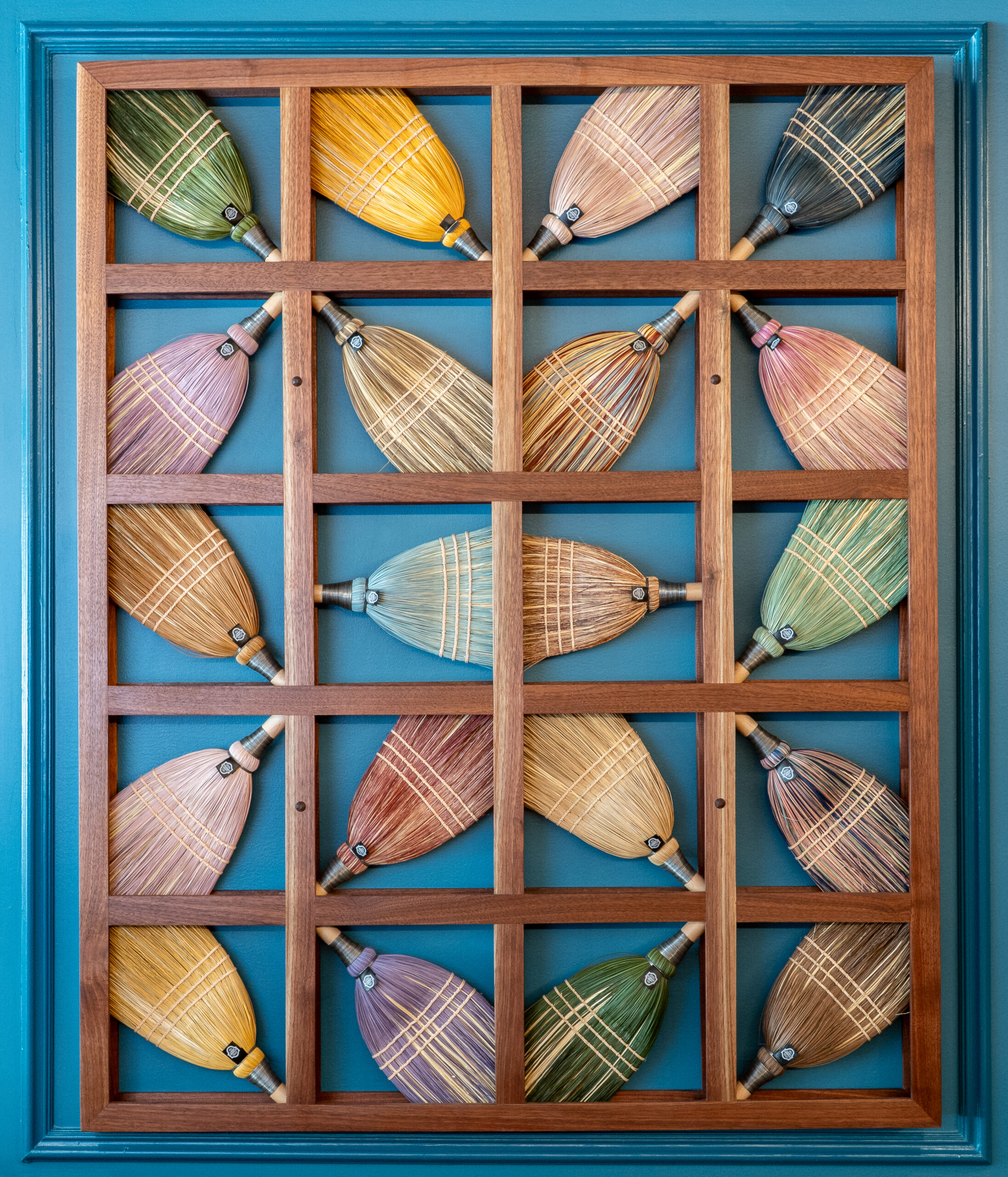
Hunter Elliott
Walnut, maple, wire, tags, sorghum (imported and Berea-grown, dyed with natural and immersion dyes)
2025
Broom Quilt celebrates the deceiving simplicity of the Streamliner. By removing the broom heads from their familiar orientation, shortening them, and removing them from their long handles – they become less functional and more sculptural. By having 20 of them all together in a grid, all in different hues and geometric orientations, they produce a quilt-like pattern. Quilting, a medium that Berea has embraced, albeit more recently, is a fantastic medium for visual storytelling and expression.
In another gesture, Hunter designed the face frame of the piece with a decorative interwoven pattern made from local walnut. Something as simple as a plain-weave pattern (over one, under one) references so many skills – basketweaving, broommaking, weaving and the like. This simple strong pattern speaks to the craft community that we are working to build both in Berea and beyond.
All of this wouldn’t be possible without the combined efforts of the students and staff of Student Craft. We are strongest when we can feed off each other creatively and work in a supportive collaborative environment. Weaving’s work with quilting made me think about pattern – Broomcraft’s dye work which produced so many experimental colors – Woodcraft’s access to local air-dried Walnut and their willingness to welcome me into their shop to build the frame– all that and much more culminated in a project that started by simply cutting a broom apart to see how it would look sitting on a shelf.
Community
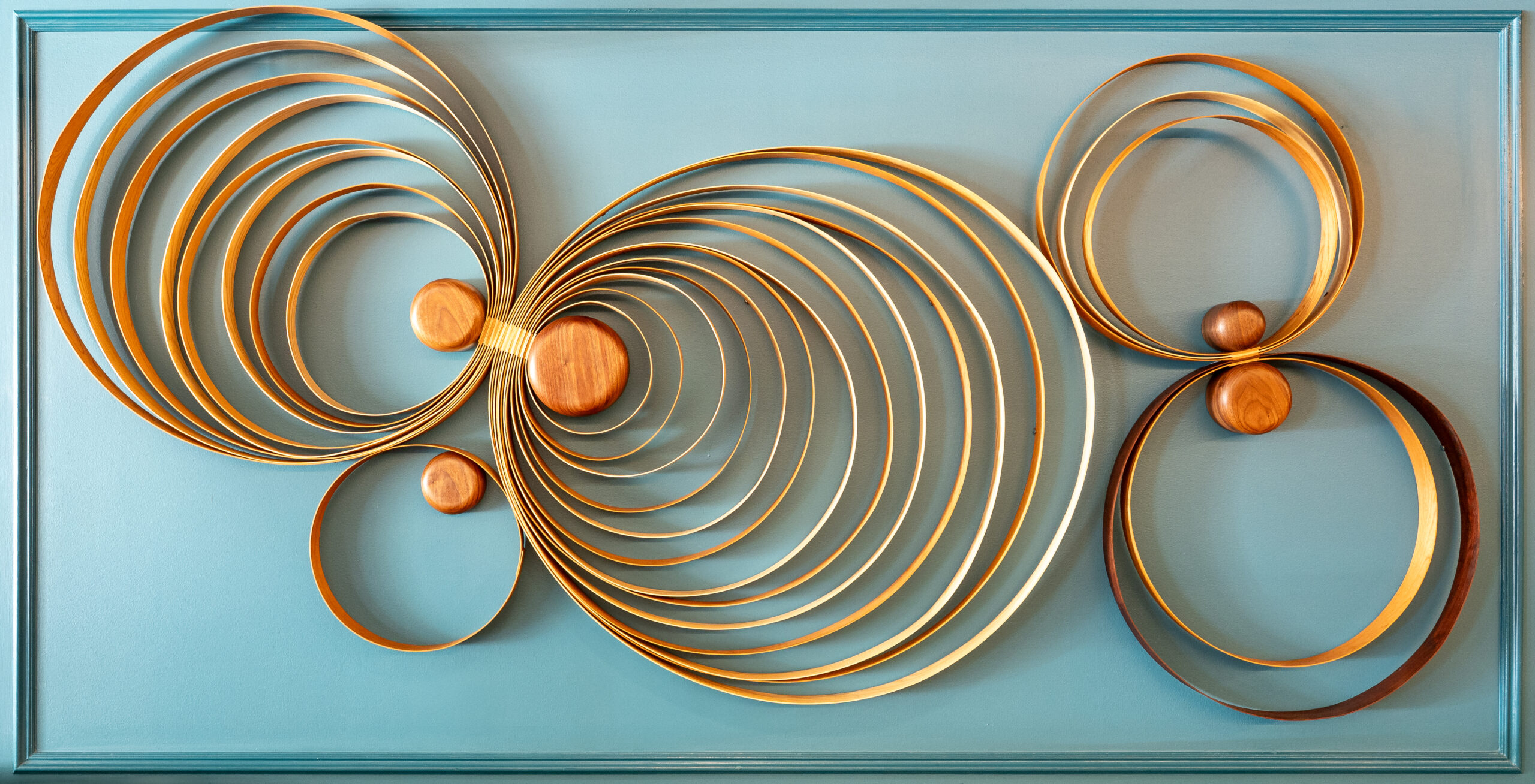
Aaron Beale
Ash, maple, walnut, cherry
2025
Inspired by the Community Basket designed as a collaboration between acclaimed designer Stephen Burks and our Woodcraft students this original design hopes to illustrate how even seemingly disparate communities are linked and rely on others for support.
Overshot
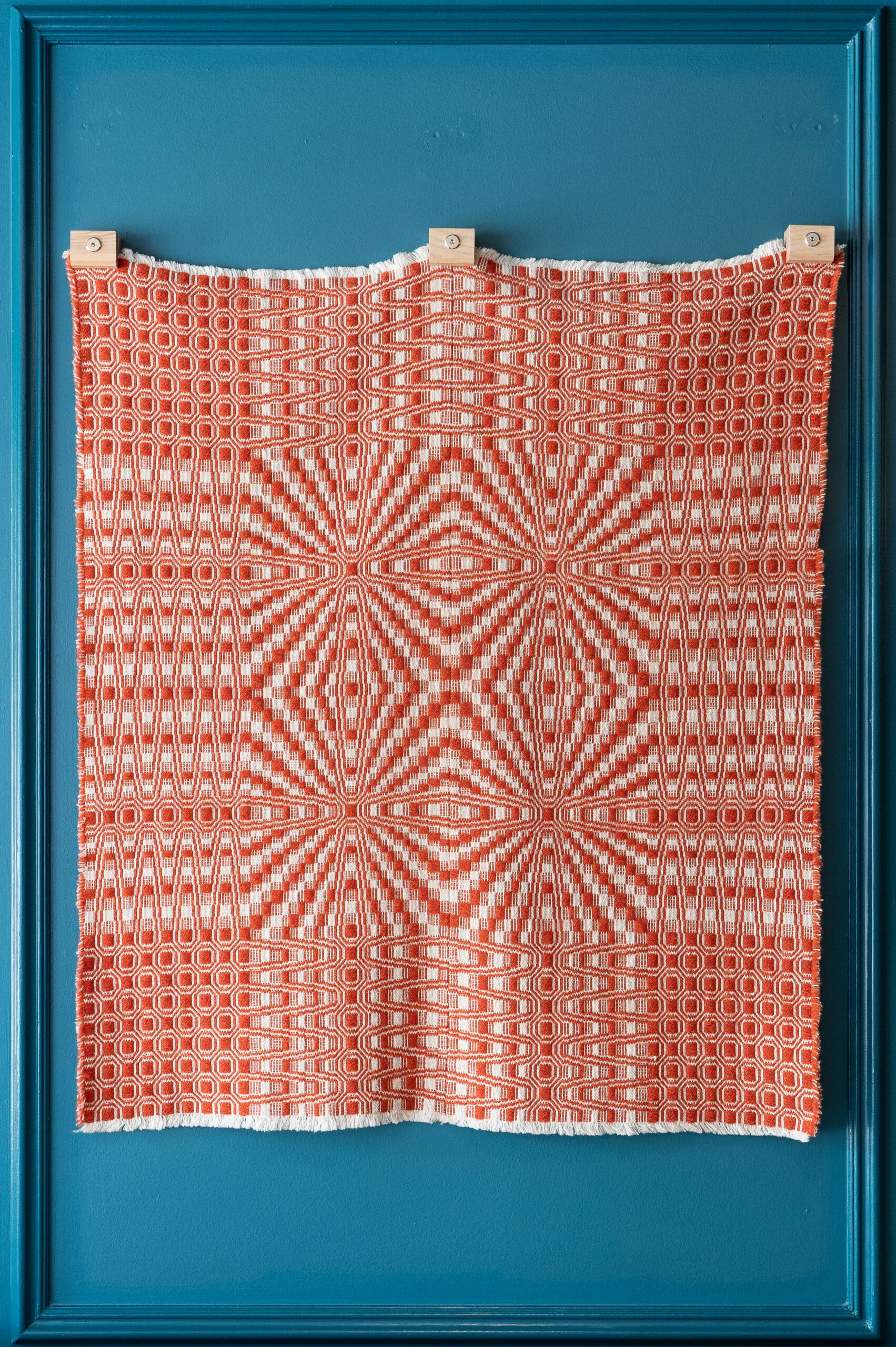
Eric Couture
Cotton, wool
2024
Overshot is a woven structure with a loaded history. It is commonly associated with particular eras of American craft history; however, its roots are much older and much further flung. The structure consists of a ground cloth, usually of a plain colored cotton or linen, and a thicker and more colorful pattern weft, usually consisting of wool. The pattern weft weaves, over, under, and through the ground cloth, forming complex geometric patterns on simple looms, and thus is extremely popular with home weavers.
This piece is a technical exploration of a particular object: the overshot coverlet. Coverlets are a decorative bed covering and were overwhelmingly woven in overshot, especially during certain eras of craft history. The large, repeating geometric patterns of these coverlets had long interested Eric, but they never had the time and space to explore them until spending time within the Fellowship program at Student Craft. Pulling from research Eric did in Berea College’s Archives and Special Collections among other sources, these coverlets and samples are modified versions of historical coverlets from the U.S. and Canada.
Additionally, Eric has been experimenting with pushing traditional overshot motifs in a more contemporary direction. Much of current day overshot aims to emulate historical aesthetics, and Eric wanted to leverage its unique characteristics and modern computer-assisted looms to make overshot that looked unlike anything they had seen previously.
Appalachian Scene

Dixie Jean Webber’25
Cotton, wool
2024
Exploring Berea’s commitment to supportive and sustainable living, student Dixie Jean Webber ’25 playfully celebrates the community she built here and how it has impacted her trajectory. Starting by hand-dyeing the cotton cloth to construct the quilt, Dixie intentionally made decisions that would deepen her understanding of the true value of the labor involved in designing and creating a cloth object. The thoughtful and dedicated cohort of students that supported Dixie in Student Craft gave her the confidence to embrace such an ambitious first quilt.
Boone Tavern Tables
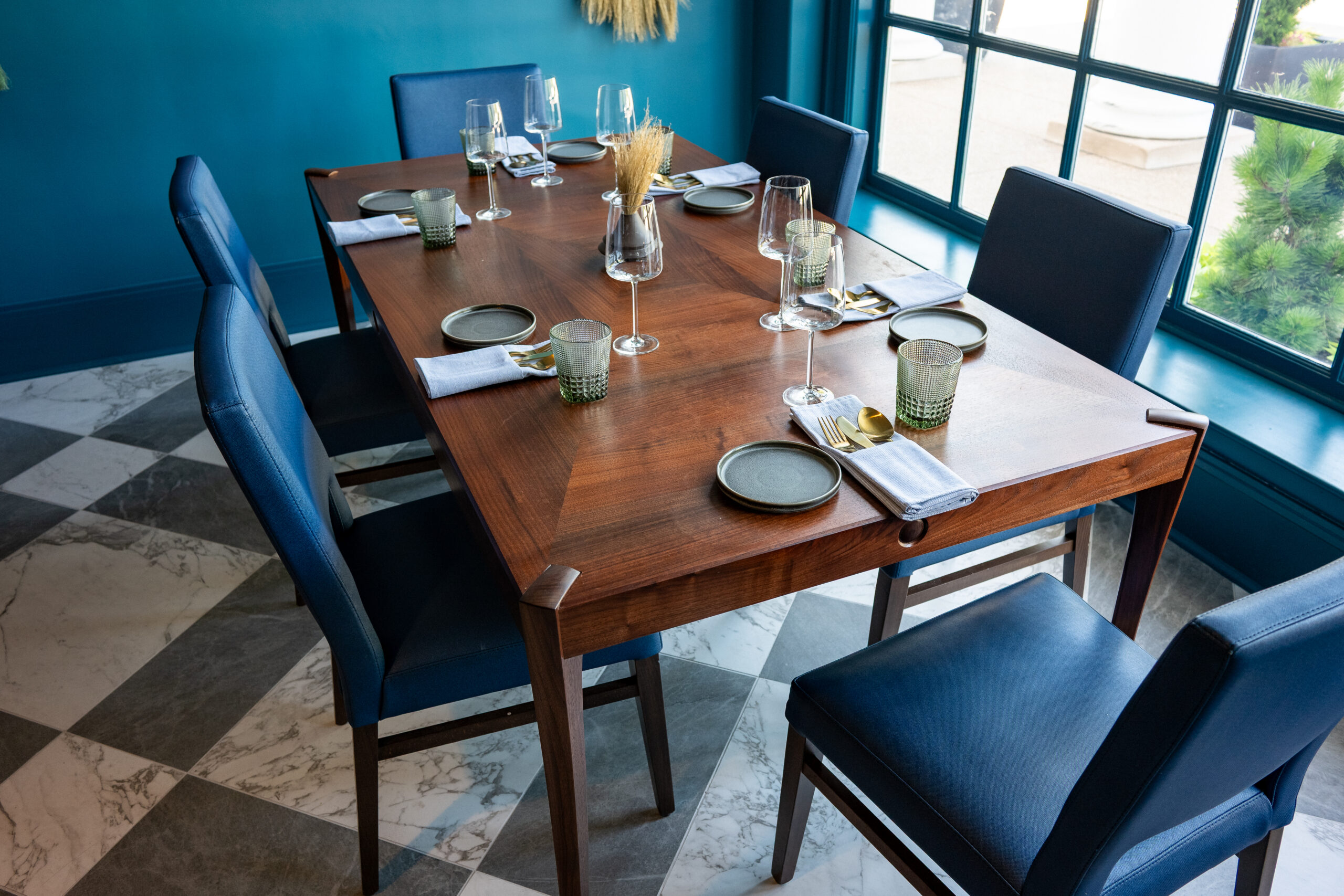
Rob Spiece, Brian Boggs, Woodcraft students from 2024-25
Walnut
2025
Designed collaboratively with former Berea College student and internationally acclaimed craftsperson Brian Boggs, these tables are constructed of air-dried walnut using a mix of modern and contemporary techniques.
Coverlet Broom
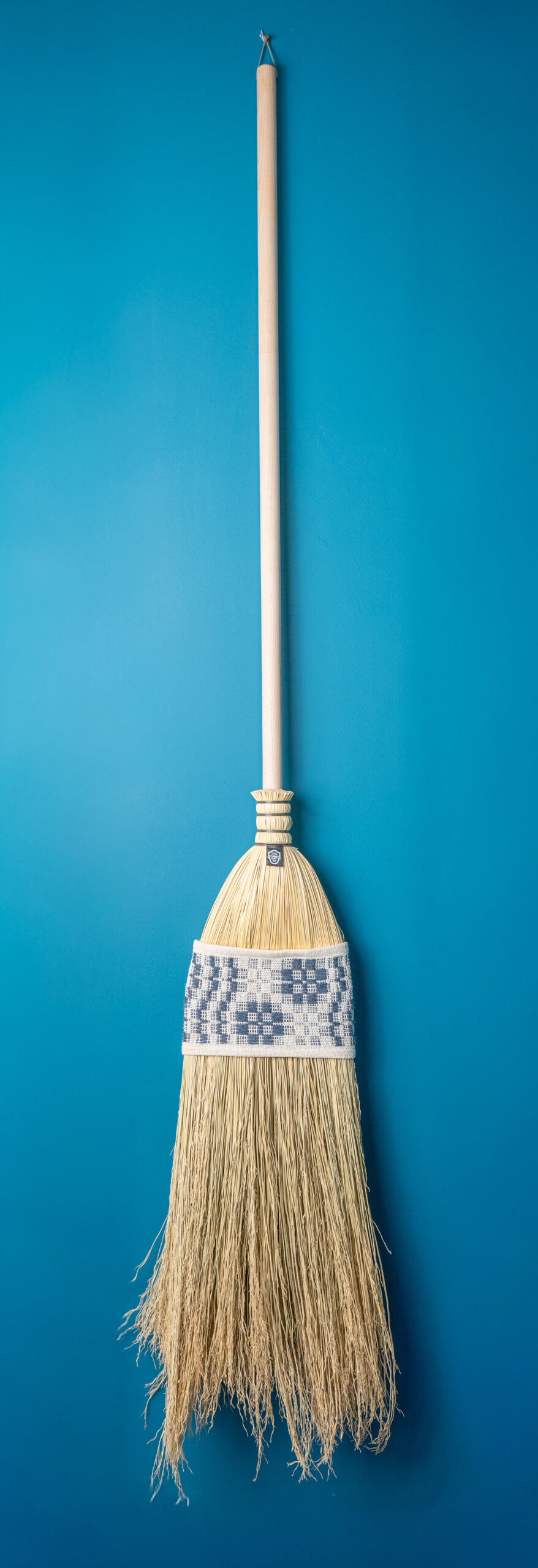
Emerson Croft, Olivine Painter ’24
Sorghum, cotton, maple
2025
In Olivine’s sophomore year they became entranced with the possibility of mixing traditional fiber art with broom making. Over the course of that year Olivine experimented with basic basket weave and crochet patterns before finding an ally in weaving manager Emerson Croft, who helped them bring the coverlet weaving that defines the earliest days of the Craft program into community with broom making. This collaboration and support is a hallmark of today’s Student Craft program.
